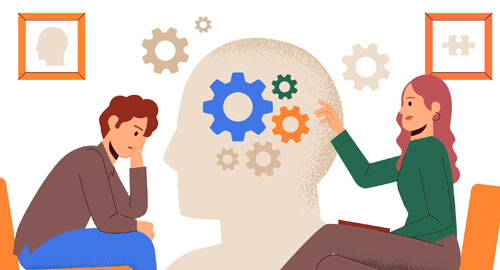

Paranoia (delusional jealousy) is a mental health issue that is destroying the lives of many people. But is every suspicion a disorder?
"Paranoia" is a mental state where one views others and their surroundings with suspicion. At its core, it is a feeling, coupled with fear and anxiety, that others are planning to harm you. Excessive distrust towards one's partner, believing they are involved with others, and feeling that others are reading one's thoughts and acting against them are all symptoms of this pathological state.
Is suspicion a disease? Absolutely not. It is a normal phenomenon. The all-knowing and the completely ignorant have no doubts. The interest in doubting and questioning is an indispensable component of growth and development. Without suspicion, there is no inquiry; without inquiry, there is no knowledge; and without knowledge, there is no progress.
However, what if one becomes suspicious of everything? Then it becomes a disorder.
The reasons behind constant suspicion and skepticism are diverse. Individuals who have over-trusted someone and suffered severe consequences as a result may develop skepticism, like a scalded cat. The experience does not have to be one's own. Witnessing another person's downfall or identifying with a character in a film or novel can also suffice. If this habit is perceived as an occasional shield, it quickly takes root and becomes part of the individual's personality.
Another form of skepticism is seen in those with an inferiority complex. A person who judges themselves as inadequate may suspect their partner. They cannot tolerate their partner interacting with others. The fear operating here is that the partner might compare them to the other person and discover their own inadequacies. This is an unconscious psychological process. Sexual jealousy and possessiveness grow into the anxiety that the partner might abandon them at any moment. The attempt to ensure this won't happen manifests as suspicion. In alcoholics and those leading a secretly immoral life, guilt manifests in the form of suspicion. Here, skepticism is a tool to restrain the partner before they can bring accusations. When suspicion and fear intensify, the patient may become aggressive or even strategically eliminate others.
Paranoia is a mental illness seen across both genders. In our society, this illness is observed in one to three out of every hundred people. It usually begins in early youth and is seen to worsen when the person reaches their thirties. The risk of paranoia is higher in alcoholics and drug users.
Paranoia is a major factor in marital discord. A wife suspecting her husband and a husband suspecting his wife are equally dangerous. This leads to the breakdown of the relationship and mutual disharmony. This delusional jealousy is one of the main causes of divorce. To be precise, if 50% of divorces are examined, alcohol is found to be the cause. In the remaining half, this delusional jealousy is the villain.